
This is not the first time the two countries have talked about extending CPEC to Afghanistan, although there have been few signs of progress. In Pakistan itself, there is no sign of the manufacturing hubs and power plants promised under CPEC, despite China utilizing the flagship project under the Belt and Road Initiative (BRI) to expand its strategic influence in the country.
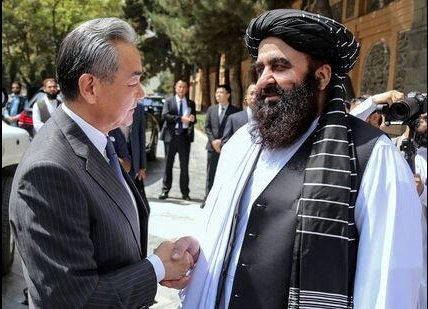
After wrapping up his engagements in New Delhi, Chinese Foreign Minister Wang Yi flew to Kabul and, along with his Pakistani counterpart Ishaq Dar, wooed the Taliban regime with an offer to extend the China-Pakistan Economic Corridor (CPEC) to Afghanistan. The offer came with a concession – in exchange for economic cooperation, both China and Pakistan want Kabul to take action against Afghanistan-based terrorist groups such as the Tehreek-e-Taliban Pakistan and the East Turkestan Islamic Movement, which pose a threat to their security.
Although India is not a signatory to the BRI, it has opposed the CPEC as a significant part of the corridor passes through Pakistan-occupied Kashmir. Any extension of the CPEC would be a red flag for the Indian side, which is working on connectivity initiatives centered around Iran’s Chabahar port to boost trade with Afghanistan and Central Asian states. According to reports in Kabul, Wang’s reception to Afghan Prime Minister Mullah Hassan Akhund was more impressive than that of Dar. This shows the contrast in relations between Islamabad and Kabul.
New Delhi should not worry too much about these developments in Afghanistan, although it needs to keep a close eye on China’s infiltration efforts, given the country’s strategic location and abundant mineral resources. A realistic approach would be to strengthen Indian influence with the Taliban regime, which supported New Delhi during Operation Sindoor and condemned the terrorist attack in Pahalgam. India can build on the goodwill among Afghans by liberalizing visas for students and patients and encouraging the Taliban to improve the conditions of women and children and resume work on development projects. A stable Afghanistan is also good for India so that it can address the challenges on its western and northern borders. In times of great global upheaval, a sectoral approach based on self-interest is the way to go.
