Trump Announces 100% Tariff President Donald Trump has announced a new 100% tax on imports of branded and patented medicines, which will take effect from October 1, 2025. While markets are hoping for calm, the move signals a new aggressive stance on trade.
Analyzing the(Trump Announces 100% Tariff) Effects on the Indian Pharmaceutical Industry
An initial reading of the policy suggests that there is limited direct threat to India’s pharmaceutical industry. The tariffs are clearly focused on branded and patented drugs, which are dominated by large Western multinationals.
The backbone of the Indian pharmaceutical sector is its robust generic drug industry, which manufactures off-patent drugs at a fraction of the cost.
Therefore, giants like Sun Pharma, Aurobindo Pharma and Dr. Reddy’s, with their primary focus on generics, appear to be largely aloof from this particular announcement.
However, the devil is in the details. The modern pharmaceutical supply chain is complex and interconnected. A significant segment of Indian pharma, including companies like Divis Laboratories, Laurus Labs and Syngene, thrives on contract manufacturing and research.
These companies manufacture active pharmaceutical ingredients (APIs) or finished formulations for innovative companies that hold patents.
Economic and Public Health Implications(Trump Announces 100% Tariff)
Economists and public health experts have expressed concerns about the potential effects of these tariffs. A primary concern is the potential for increased drug prices for American consumers. Tariffs on imported drugs are expected to be passed on to consumers in the form of higher prices, making essential medicines less affordable.
Furthermore, there are fears that these Trump Announces 100% Tariff could lead to drug shortages if foreign manufacturers decide to reduce their exports to the US market or if the transition to domestic production does not go smoothly. Any disruption to the complex global supply chains for medicines could have significant and far-reaching consequences.
Supporters of the policy argue that it would create jobs in the US and enhance national security by reducing reliance on foreign sources for important medicines. They argue that the long-term benefits of a strong domestic pharmaceutical industry outweigh the short-term challenges.
Blow to Major Exporters, Respite for Generic Manufacturers
The announcement has sent shockwaves through the global pharmaceutical industry, with major exporters of branded drugs to the US likely to be hit hardest. European nations are particularly likely to be hit by the new tariffs.
For India, a leading supplier of generic drugs to the US market, the immediate impact is expected to be less severe. Most of India’s drug exports to the US are generics, which are not targeted by the tariffs. However, there are concerns in the Indian pharmaceutical sector about the possibility of expanding the scope of the tariffs to include generic drugs in the future. There is also uncertainty around the precise definition of “branded” versus “branded generic”, which could affect more products than initially expected.
Trump Announces 100% Tariff final product
A 100% tariff on the final product directly targets their clients. The critical question becomes: who will bear the brunt of this cost? If the innovator companies (the clients) are forced to absorb the tariff, they will likely put immense pressure on their Indian contract manufacturing partners to lower prices, thereby squeezing their margins.
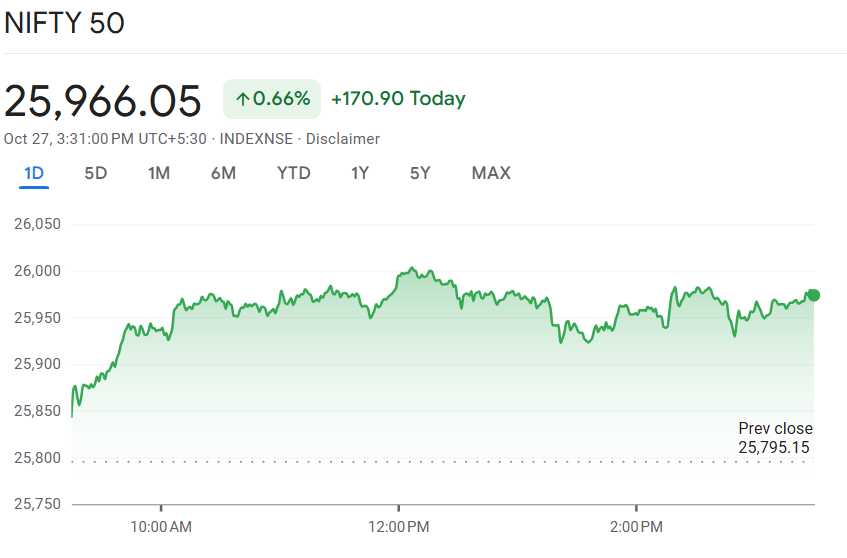
The market’s reaction was telling: while Aurobindo’s stock was largely flat, Divis Labs and Laurus Labs fell by 4% and 7%, respectively, indicating investor concern over this exact vulnerability.
This move is not an isolated event. Coupled with new tariffs on household items like furniture and kitchen cabinets, it forms a coherent, if contentious, economic strategy.
The stated goal is clear: to make the US a manufacturing powerhouse once again by incentivizing domestic production through protectionist measures.
However, as the famous economist Frederic Bastiat observed, the difference between a good and a bad economist is that the bad one considers only the immediate, visible effect, while the good one considers both the seen and the unseen consequences.
Tariffs on foreign steel, for example, may save a few thousand jobs in the US steel industry-a visible benefit. The unseen cost is the damage inflicted on all American industries that use steel as an input.
Car manufacturers, appliance makers, and construction companies face higher material costs. This leads to more expensive products for consumers, lower corporate profits, and potential job losses in these much larger sectors.
The net effect on the economy is often a loss, as the concentrated benefits for a few are outweighed by the diffuse, but far greater, costs to the many.
Furthermore, policymakers must contend with the spectre of inflation. Making imported goods-from medicines to furniture-more expensive, directly contributes to rising consumer prices.